
Blog

How to
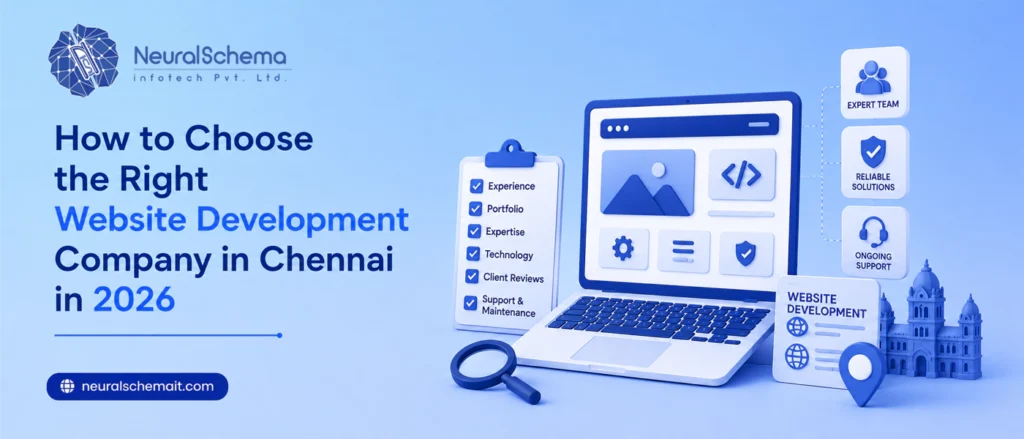
Choose the Right Website Development Company in Chennai in 2026
Your website is often the first interaction customers have
with your business. If it loads slowly, looks

Your website is often the first interaction customers have with your business. If it loads slowly, looks outdated, or is hard to navigate, visitors may leave quickly. Choosing the right website development company in chennai is not just about design—it is about finding a partner who understands your goals, audience, and long-term growth.
With many agencies offering similar services, knowing what to evaluate helps you make a better decision.
1. Define Your Website Goals
Before approaching a company, be clear about what your website should achieve. It may be generating leads, selling products, booking appointments, or building brand credibility.
Also identify key features such as enquiry forms, payment gateways, booking systems, chat support, or third-party integrations. Clear requirements help the website development company in Chennai suggest the right solution, timeline, and cost.
2. Check the Company’s Portfolio
A portfolio shows real work and capability. Don’t focus only on visuals—check usability, structure, and performance.
Look for:
- Clear purpose in each website
- Easy navigation and readability
- Mobile-friendly design
- Strong call-to-action placement
- Consistent and professional layout
Even if a company has not worked in your industry, it should still demonstrate the ability to understand user needs and build accordingly.
3. Focus on Function, Not Just Design
A good-looking website is not always effective. It should guide users smoothly and encourage action.
Ask how the company handles user experience, navigation flow, and conversion-focused design. A professional team will explain design decisions based on user behavior rather than trends. The professional web development agency balances design, usability, speed, and business goals.
4. Evaluate Technical Skills
Technology should match your requirements, not just developer preference. Ask what platforms and tools will be used and whether the system can scale in the future.
A thorough technical evaluation ensures your website is built on a scalable architecture—preventing future performance bottlenecks, slow loading speeds, and security vulnerabilities.
Common requirements include:
- WordPress or CMS platforms
- Custom web development
- E-commerce systems
- Payment integration
- API connections
- Cloud hosting
- Database management
The company should clearly explain benefits, limitations, and maintenance needs in simple terms.
5. Ensure Mobile and Speed Optimization
In 2026, mobile-first design is essential. A responsive website must do more than resize—it should offer smooth navigation, readable content, and easy interaction.
Pages should load quickly, buttons should be easy to tap, and forms should work smoothly on mobile devices.
Ask how performance is improved. Good agencies use image compression, clean coding, caching, optimized hosting, and minimal unnecessary scripts.
6. Make Sure It Is SEO-Ready
SEO should be built into development from the start. A strong technical base helps search engines understand and rank your website better.
Common requirements include:
- Clean URLs
- Proper heading structure
- Fast loading speed
- Mobile-friendly design
- Optimized images
- Internal linking
- Meta tags
- XML sitemap
- Schema markup
Avoid companies that promise instant rankings. SEO success depends on content, competition, and ongoing optimization, not just development.
7. Understand Process and Pricing
A professional company follows a structured process: planning, design, development, testing, launch, and support.
Before starting, request a clear quotation covering:
- Number of pages
- Features included
- Design and development scope
- Timeline
- Revision limits
- Payment structure
- Maintenance or hosting costs
Avoid choosing only based on low price. Cheaper options may skip important areas like testing, security, or SEO setup.
8. Check Security, Ownership, and Support
Security is essential. Ask how the company handles SSL, backups, updates, malware protection, and data safety.
Also confirm ownership of the website, source code, and content after project completion. You should have full access to your domain, hosting, and analytics accounts.
Post-launch support is equally important. Ensure the company offers maintenance, updates, bug fixes, and technical assistance after launch.
Why Consider NeuralSchema Infotech?
NeuralSchema Infotech builds fast, mobile-friendly, and SEO-ready websites tailored to your business needs. If you are looking to partner with the best website development company in Chennai, our team aligns technology, design, and digital marketing to help you scale. From custom web applications to robust branding strategies, we deliver comprehensive development solutions that drive measurable business growth under one roof.
Frequently Asked Questions
The cost depends on the website type, design, features, and development platform. Basic websites cost less than custom or e-commerce websites.
A standard business website may take a few weeks, while complex websites can take several months, depending on the project scope and features.
WordPress is suitable for most business websites, while custom development is better for unique features, workflows, or advanced integrations.
Yes, many companies provide post-launch support for updates, security, bug fixes, and maintenance. Always confirm the support terms before starting the project.
Final Thoughts
Choosing the right website development partner requires careful evaluation of experience, technical skills, communication, pricing, SEO approach, and support.
A good company does more than build a website—it understands your business.
Recent Posts
- Website or Mobile App First A Practical Guide for Growing Businesses
- 10 Best Mobile App Development Companies in Chennai 2026 Guide
- Google August 2026 Spam Update: What Businesses Need to Know
- How to Choose the Right Website Development Company in Chennai in 2026
- Logo Design Trends 2026: Emerging Styles and Creative Ideas for Modern Brands